“Can we count on you to rush a donation to help us WIN tonight?”
We’ve all gotten these texts, right? Some PAC with a name like “Democratic Fighters Freedom For The Future Fund” wants $15 RIGHT NOW, but they don’t say why.
Or it’s a “rare triple match opportunity” to help Democrats “take back the House in 2026.”
Maybe the text is “from” some big-name Democratic politician who is very, very disappointed that you haven’t chipped in yet.
Meanwhile, I’m very, very disappointed that the big-name Democratic politician hasn’t done anything to stop Elon Musk’s operation to ransack the federal government.
Why should I give $15 to people who are focused on winning an election that’s more than a year away? And why aren’t they focused on what is happening RIGHT NOW in my community?
The actions of the administration are causing irreparable harm every minute of every day. In the words of Dr. Martin Luther King Jr., “We are now faced with the fact that tomorrow is today. We are confronted with the fierce urgency of now. In this unfolding conundrum of life and history, there is such a thing as being too late.”
The 2026 election will be too late.
Last weekend, the US shipped hundreds of immigrants from Venezuela to a prison in El Salvador on the allegation that they are members of the gang Tren de Aragua. They were detained and deported without due process or even a legitimate investigation of the allegations against them. A judge had issued an order to prevent that action, which the government ignored. Since then, the Department of Justice has obstructed legal action through a lack of cooperation. The people in question remain in El Salvador, but the Venezuelan government says none of them have ties to Tren de Aragua.
If you are a candidate, a lawmaker, or a fundraiser, tell me what you are going to do for those people RIGHT NOW. Tell me what actions I can take to protect my neighbors from the threat of extrajudicial rendition.
On Friday, Trump announced that he was moving administration of federal student loans out of the Department of Education and tasking the Small Business Administration with taking over the programs. This came after SBA announced cuts of 40% of their staff. This maneuver is flatly illegal – the Higher Education Act of 1965 stipulates that the Federal Student Aid Office should be supervised by the Secretary of Education.
Next year my son and his classmates will be applying to college. What does this mean for them? What does it mean for the institutions they may seek to attend? I need candidates, lawmakers, and the message-bearers for my party to explain this to me and tell me how to prepare. I need to hear what they are doing RIGHT NOW to ensure that college is accessible to all students, not just the children of billionaires.
The acting administrator of the Social Security Administration was flatly resistant to a court order blocking DOGE staff from accessing personal data of Social Security recipients. He threatened to shut down the entire IT infrastructure of the agency, which would have prevented payments from processing. The Treasury Secretary went on tv and said only “fraudsters” would complain about missed Social Security payments.
What do candidates, lawmakers, and party leaders intend to do RIGHT NOW to protect the sensitive personal data of some of the most vulnerable Americans? What are they doing to assure people on fixed incomes that their income is, in fact, fixed? How can they be sure that their Social Security payments will not be yanked away like a ball in a sick game of political keep-away?
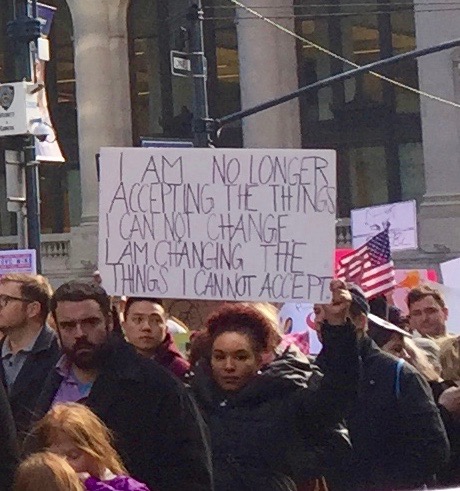
I need the future leaders of America to understand that the future is not what keeps me awake at night. It is our present that that fuels my nightmare. I need to protect myself, my family, and my community RIGHT NOW. America can’t wait until 2026 for solutions. That is the message we should send elected officials and candidates. Every call, every email, every protest sign should communicate the fierce urgency of now.
In the meantime, there are hundreds of organizations across the country that are on the ground offering help to people in their time fierce and urgent need. One of the best things we can all do is help the helpers. If you have the means, please support grassroots organizations like food banks and abortion funds and legal aid groups and independent media outlets that are doing the work every day.
“What you’ve got to do is finish what you have begun. I don’t know just how. But it’s not over till you’ve won.”
This past weekend I saw a high school production of the musical The Secret Garden. First of all, if you want to regain faith in humanity, go watch a group of teenagers putting their whole hearts into a show. I promise you will fall in love with every singer, dancer, orchestra member, and stagehand involved. It will remind you why you keep fighting for a democratic future for our country.
My favorite song from The Secret Garden has always been “Hold On,” a song about trusting that you can outlast the worst moments in your life. The lyrics hit different during this chapter in history. Holding on seems so hard, when national leadership is lashing out, assailing us with lies and cruelty and spite.
“Child, hold on to what you know is true,” the song says.
Here is what I know is true:
This is not normal.
This is not ok.
“When you feel your heart is poundin’, fear a devil’s at your door There’s no place to hide, you’re frozen to the floor. What you do then is you force yourself to wake up, and just say ‘It’s this dream, not me that’s bound to go away.’”
I feel like I’m walking in a haze where dream and nightmare collide. In the dream, teenagers from one of the most diverse public schools in the country are putting on musicals about hope in the face of grief and fear. In the nightmare, I have to remember that those kids now live under threat. I remember that those kids are the children of immigrants, the children of federal workers. Those are kids who use alternative pronouns and date across the gender spectrum. I have to remember that vengeful, petty men are tearing apart the very principles that ensure those students are given an opportunity to live, learn, and make art together.
I can sit in the theater and cheer for a few hours but I can’t forget what Trump and Musk and their lackeys are doing just down the road from that high school.
It is not normal.
It is not ok.
“And it doesn’t even matter if the danger and the doom, Come from up above or down below or just come flying at you from across the room.”
We have to confront what we know is true and we can’t hide from our responsibility to speak out.
The administration is destroying the government programs and institutions that have been central to our way of life since World War II. They are wreaking havoc on the economy, increasing unemployment, shattering consumer confidence, and risking recession. They are shifting global alliances and positioning the United States alongside dictatorships like Russia and Turkey.
Moreover, the White House escalating its abuses of power in ways that we simply cannot ignore. Their actions are becoming increasingly targeted on individuals and specific institutions, with a clear intent of punishing them and intimidating others. Just this past week, they let loose a series of actions designed to quell dissent and terrify dissenters.
Trump issued an executive order punishing a law firm that represented Hillary Clinton and the DNC, lambasting the firm for past and present commitment to diversity in hiring. The order revokes security clearances for attorneys in the firm and prohibits them from talking to federal employees or entering federal buildings.
In addition, ICE arrested a former Columbia student who was involved in the protests. Mahmoud Khalil was detained Saturday in New York and flown to an immigration jail in Louisiana. Khalil is a legal permanent resident and married to a US citizen. He was not accused of any crimes related to the protests – or any other crimes. The Trump administration is planning to revoke his green card, a tactic normally only employed when a resident is found guilty of serious crimes.
Following Mahmoud Khalil’s arrest, Trump posted on social media, saying “This is the first arrest of many to come. We know there are more students at Columbia and other Universities across the Country who have engaged in pro-terrorist, anti-Semitic, anti-American activity, and the Trump Administration will not tolerate it,” he wrote. “Many are not students, they are paid agitators. We will find, apprehend, and deport these terrorist sympathisers from our country – never to return again.” He urged colleges and universities to “comply” with his demands.
Trump suggested that boycotts of companies owned by Elon “Rasputin” Musk are illegal, saying “But the Radical Left Lunatics, as they often do, are trying to illegally and collusively boycott Tesla, one of the World’s great automakers, and Elon’s ‘baby,’ in order to attack and do harm to Elon, and everything he stands for.” He also suggested that the spate of vandalism at Tesla dealerships should be considered domestic terrorism.
This is not normal.
This is not ok.
“When you see a man who’s raging and he’s jealous and he fears That you’ve walked through walls he’s hid behind for years. What you do then is you tell yourself to wait it out And say ‘It’s this day, not me that’s bound to go away.'”
In my heart, in my very soul, I know that the students in that theatre are what is right and good. I don’t understand why anyone would hate or fear what they represent.
But Donald Trump and Elon Musk are showing us that they do hate them. They hate diversity and they hate free expression and they hate dissent and they hate difference. And they are doing everything in their power to suppress all of those things.
And so I stand in the crowded theatre of American discourse and shout, “THIS IS NOT NORMAL. THIS IS NOT OK!”
I beg of you all to shout with me. Shout it in church, shout it in the streets, shout it online, shout it in letters and phone calls to elected officials. Don’t stop shouting. Don’t give up.
We must hold on to what we know is true.
Hold on. Hold on.
Credit: All quoted lyrics are from the song “Hold On” from The Secret Garden by Marsha Norman and Lucy Simon.
Joe Biden’s presidential administration focused significantly on growing the middle class. That was, in fact, the throughline of President Biden’s political career. He came from the middle class and saw a strong middle class as the engine of a successful economy and an opportunity for Americans to access housing, healthcare, food security, and education while still having enough money left over for a summer vacation and the occasional emergency car repair.
Without going deeply into the weeds of the Biden legacy, I can point to three key policy areas where he expanded points of entry into the middle class: the passage of the Affordable Care Act in 2010, his student loan forgiveness efforts during his presidency, and his commitment of DEIA principles in federal hiring and contracting.
Biden’s On-Ramps on the Road to the Middle Class
Health Insurance Access
The most significant reforms of the Affordable Care Act addressed access to health insurance. Prior to ACA, insurance companies were free to deny coverage to individuals. They were legally permitted to refuse to issue policies based on prior health history, exclude coverage for pre-existing conditions, and impose annual and lifetime caps on coverage.
The result was an insurance system where many individuals could only acquire health insurance coverage under an employer-sponsored group plan. Leaving a job would mean leaving behind health insurance, resulting in obstacles to job mobility and entrepreneurship. Increasing access to individual insurance policies reduced so-called job lock, where people stayed in jobs simply to keep their health insurance. It enabled people to make different career choices and take more professional risks while still being able to get adequate health insurance.
Affordable Higher Education
College education is probably the single most direct path to the middle class. Unfortunately, the cost of college education has grown astronomically. Students and their families have access to both federal and private loans to defray costs and many take advantage of these programs. Loans make college possible but debt repayment often takes decades, with borrowers paying back many times their loan principal in interest and other fees. Even people in well-payed jobs feel a budget pinch due to their monthly loan payment obligations.
Forgiving loans after paying back a designated amount of principal and interest still makes lenders whole, but it changes the monthly budget picture for borrowers. For many borrowers, completing student loan payments is the equivalent of getting a massive pay raise.
Federal DEIA Principles
The federal government is the largest employer in the United States. Federal jobs are stable, well-paid, and come with robust benefits. In addition, the federal government contracts with private sector vendors to provide goods, services, and labor, and those contracts constitute a reliable, competitive revenue stream. As an employer and client of private employers, the federal government drives hiring for skilled workers into stable, middle-class jobs.
DEIA programs represent a mindful approach to ensuring that all Americans have access to federal job and contract opportunities. Initiatives can include efforts as simple as expanding where the federal government advertises job and contracting opportunities so they reach a broader applicant pool. Other initiatives include mandating a certain number of contracts go to qualified minority-owned businesses. The intended result is to ensure that more people can take advantage of federal employment and contracting.
Trump’s Roadblocks on the Road to the Middle Class
In contrast, the Trump administration appears to be on a direct path to shrink or eliminate the American middle class. And, honestly, it doesn’t seem like that’s an unintended effect.
In early February, the Trump administration tasked Elon Musk and DOGE with slashing the size of the federal workforce. Firings have already rocked the federal workforce. Last week, OPM issued a memo directing agencies to begin reducing workforce and cutting programs. That effort could result in tens of thousands of jobs being eliminated.
Cuts to spending on federal grants and contracts are also leading to widespread layoffs and loss of services. As the cuts continue, thousands of skilled workers who relied on contracts and grants from agencies like the Department of Defense, Department of Energy, National Science Foundation, and National Institutes of Health will find themselves cut off.
This is not just a temporary problem; without the government as an employer or client, the demand for millions of skilled jobs will vanish. An entire segment of the middle class will be both unemployed and unemployable as Trump and Musk erase the massive swath of the economy powered by federal spending.
Trump and Congress are also weighing policies that will reduce access to higher education. Trump is hostile to loan forgiveness programs. He has halted applications for income-driven repayment (IDR) plans, which are an initial step in applying for long-standing loan forgiveness programs like the Bush-era Public Service Loan Forgiveness Program.
The House Budget Resolution passed this week and includes more changes to student borrowing, including:
Capping Pell Grants at the median cost of attendance.
Sunsetting Grad And Parent Plus Loan
Limiting eligibility for the Public Service Loan Forgiveness program
Reducing federal student aid makes it harder for students to afford college, more likely to need loans from private institutions, and less likely to be able to get out from under student debt. The debt repayment issue is especially stark in light of the loss of job prospects for so many graduates who would have made careers in public service or as federal contractors.
The third leg of the middle-class tripod is access to health care. The House has all but guaranteed cuts to Medicaid over the coming years, with the directive to the Energy and Commerce Committee to find over $800 billion in savings over the next decade.
A portion of the subsidies that help millions of people afford health insurance are set to expire in 2025. If Congress doesn’t extend them, ACA enrollees could face premium increases of 75-100%. That could also affect the group market, with insurers raising premiums on employer-sponsored plans to offset changes to the ACA and Medicaid markets.
Increased health insurance costs to employers have been a consistent problem for years. Costs rose by an average of 8.5% in 2024, compared to just 4.5% in 2022. These step increases result in reductions in benefits and higher out-of-pocket costs to employees.
What’s the New Destination?
Historians and fans of dystopian fiction can all see the framework of serfdom in the Trump/Musk machinations. Reducing the middle class frees up money so oligarchs like Musk can grab it for themselves. Musk is open about wanting to replace federal workers with AI systems – presumably systems he will own and from which he will profit.
The remainder of displaced workers and new graduates may be able to find employment with major tech firms that win contracts to provide services once offered by government. Those workers will be locked into those jobs by the unafforability of health insurance and the need to pay back student loans.
Limited college options for rising high school graduates takes them off the path to middle class adulthood. The low-skill, low-pay, hourly jobs left over after the AI takeover may seem like the best option to young adults who can’t afford college. That sets them up for a lifetime of a paycheck-to-paycheck existence and limited advancement options.
I write this all with a sense of growing despair. I am a middle class parent of children who aspire to middle class futures. I want to hand them the New Deal promises of Frances Perkins, FDR, and Joe Biden, not the techno-feudalism of Peter Thiel and Elon Musk.
Protecting the middle class will take a herculean effort. We need to raise awareness of what’s happening, as well as fomenting resistance to the billionaire-aligned majority in Congress, the White House and the Judiciary. It starts with demanding that leaders protect access to healthcare, education, and stable jobs. Calls, emails, protests, and rallies are making a difference but we can’t stop now. Our whole future is at stake.
The thing about living in unprecedented times is that you will be called to do unprecedented things. Or at least things that are unprecedented for you.
And make no mistake, we are living through unprecedented times. There is a tectonic shift happening around us all. This is not the normal partisan squabbling that happens in a healthy, two-party society. This is a technocratic takeover of our society by power-mad oligarchs who have control of the vast reserves of money, all branches of government, the mainstream news media, and much of the internet.
The world – YOUR world – is going to change.
Your choice now is how involved you want to be in the changes that are coming.
I know that you’re recoiling from what I just wrote because it sounds so insurmountable. Trust me, I feel it, too. It’s taken me 20 minutes to figure out how to write this paragraph where I transition from the clarion call of “Havoc!” to tell you how we can “let slip the dogs of war” and take vengeance on the would-be assassins of our democracy.
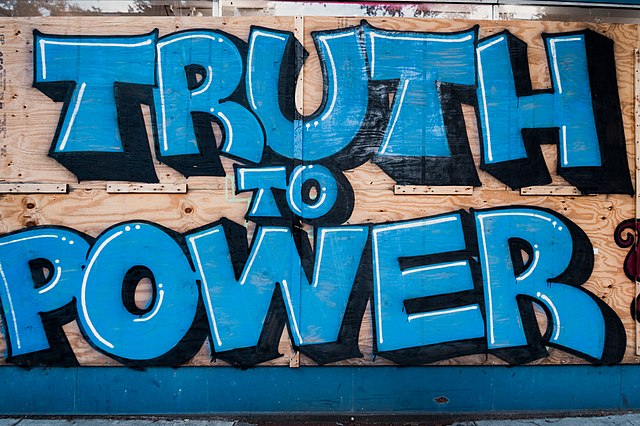
We start, as Shakespeare’s Marc Anthony did, with words. We stand up and use our voices to speak truth to power.
Or at least speak the truth on Facebook.
Use Your Words
Yes, the idea of standing up to friends, family, local leaders, internet trolls, and the entire media ecosystem is terrifying. But fear is not an excuse to stay silent. You can feel fear and still take action. In the words of Our Lady of Chutzpah, She of Blessed Memory, the One and Only Carrie Fisher, “Stay afraid, but do it anyway. What’s important is the action. You don’t have to wait to be confident. Just do it and eventually the confidence will follow.”
Carrie Fisher is right. You don’t have to be confident. You don’t have to be eloquent. You don’t have to be confrontational. All you have to do is take one action: be honest.
In a maelstrom of lies, honest words are powerful.
Internet Discourse 101
I’ve spend many years arguing on the internet and I’ve learned a lot about how to do it. That main thing I’ve learned is that arguing on the internet isn’t actually a good idea. Mayyyyybe you’ll get a few good roasts in but mostly it’s just going to make your carpal tunnel issues worse. So don’t bother.
On the other hand, talking on the internet? Spitting facts on the internet? Bringing truth to the internet? THAT is powerful.
To be an effective truth-teller, all you have to do is follow these three simple rules:
Fact check yourself in advance: Don’t fight misinformation with mistakes. Take a few minutes to double-check your facts before you post them. Every time you share information that is correct, you are building your own reputation as someone who is knowledgeable and honest. Before you know it, the people around you will regard you as a trusted source.
Talk like nobody is listening: The point of speaking up about things that matter to you is that they matter to YOU. Don’t try to tailor your message to anyone else. Don’t obliquely refer back to things other people posted. Just say the honest thing you want to say and hit submit.
Don’t reply to the comments: Say everything you want to say in your initial post, and ignore the provocations in the comments. Do not argue your point further. Do not justify your position. Do not give your valuable time and energy to people who want to tear you down. If they don’t like what you said, that’s about them.
Talk Isn’t Cheap
What does this look like in practice? Let me demonstrate.
Let’s say you see a news article that says that DOGE has fired 1000 National Park Service employees and you’re upset because your sister-in-law works in a National Park. You want to share your feelings and be supportive of your SIL. So do it!
Do some searches to make sure that information is accurate (spoiler: it’s accurate). Remember that facts matter. Always start with facts.
Once you have your facts straight, share the news and say, “This is heartbreaking. National Parks are so wonderful! My SIL got her dream job in Yosemite last year. She visited during a family vacation when she was a kid and loved it. She studied ecology and as a Park Ranger she gets to share how much she loves the park with visitors. I hope our leaders recognize the value of National Parks and the people who work there.”
That’s all you need to say. You don’t need to reply to whatever edgelord shows up in your comments mansplaining why we should drill for oil in Yosemite. You don’t need to justify the starting salary of a National Park Ranger to a “socially liberal, economic conservative.” You don’t have to get into a debate about entrance fees at National Parks with a libertarian. If they want to have those conversations, they can initiate them on their own pages. You already said what you wanted to say.
By posting your honest, factual sentiment, you have put a face on the situation. You spotlighted the way National Parks inspire young people. You illuminated the education and skills that National Park staff bring to work. You described the intergenerational value of National Parks, and how they deliver joy to families right now, and inspire future scientists and public servants.
And, maybe most importantly, you showed your SIL that you care about her and what she loves. You showed her that she isn’t fighting this battle alone.
Your Silence Will Not Protect You
There is a risk to speaking up, of course. Will your words matter? Are you inviting conflict for no good result? Is it safer to stay silent? I contend that it is not.
As Audre Lorde says, “Your silence will not protect you.” Elie Wiesel further summed up the risk of silence, saying, “There may be times when we are powerless to prevent injustice, but there must never be a time when we fail to protest.”
Be brave. Be loud. Be bold. Cry havoc, and let slip the dogs of war.
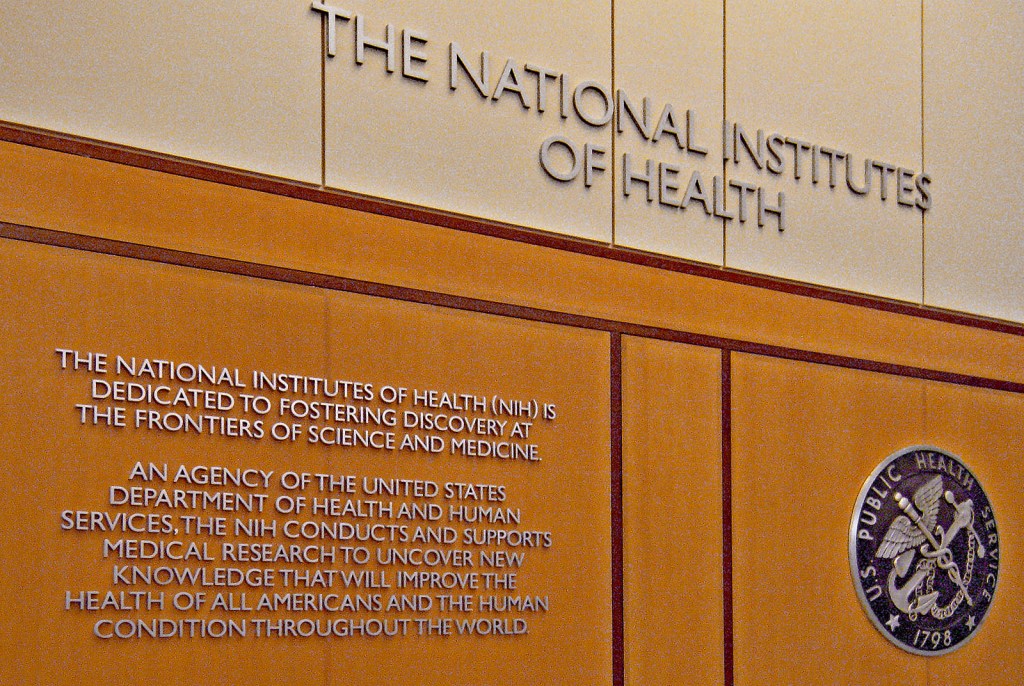
The best job I ever had was working for a public health non-profit that advocated in support of cancer research programs at the National Institutes of Health. I am in awe of people who do biomedical research and provide direct health care to people who need it. I loved working in an environment where I interacted with investigators, doctors, nurses, and patients who were part of the medical research ecosystem. it was fascinating and inspiring in equal measure.
I grew to understand that the synergy between the public, academic, and private sectors forms a dynamic and powerful engine for scientific advancement. Grants from NIH fund discoveries at universities which result in government approval of therapies that are licensed and marketed by private companies. Graduate students assist in NIH-funded labs and use that experience to start their own labs or work in the pharmaceutical or medical device industries. Health care providers partner with clinical trials overseen by NIH to match patients to trials that might benefit their health. Patients agree participate in trials for cutting edge treatments and let their experience add to the body of knowledge about medical science. Every person, every institution plays a role.
I cannot envision American biomedical innovation without NIH. I don’t want to imagine what will be lost if Trump and Musk continue to decimate America’s preeminent medical research institution.
The people who work at NIH want to help people through science. For many, a position at NIH is fulfillment of a lifelong career goal. It’s a professional honor and also a stable career that allows them to pursue the American dream for themselves: a home, a family, a chance to make a difference. What more can any American ask?
These are the stories of NIH employees in 2025. This is the damage Trump and Musk are doing to scientists – and to science. Please let your federal lawmakers know that these chaotic, disorganized cuts to NIH are unacceptable.
“I worked too hard to get where I am in life to let someone lie to my face over an email without even spending a minute to really get to know me or look at my performance.“
When I first joined NIH, I was thrilled to be able to make my small contribution to the American public and be part of the great mission of the agency. It was a great honor, even though I was only a contractor for many years before I finally was able to find and qualify for a full-time government position. The day I joined the NIH as an employee was a proud one – there is so much excitement and pride in taking the oath and becoming a civil servant. All that said, what has happened over the past few weeks, including receiving THE termination letter, has been devastating on many levels.
It all started with extreme stress and anxiety of the unknown and the constant headlines in the news about scares that were coming our way. Stress that some of my closest friends also shared. The anxiety soon resulted in regular heart palpitations, loss of sleep, loss of appetite, and eventually loss of weight. The culmination was Friday evening through Saturday, right after I was informed that I may be on the list of terminated employees. I spent Friday evening, sleepless night, and all day Saturday checking my work computer every few minutes or hours, anxiously awaiting and hoping not to receive a termination email. After so many days of anticipation, I was somewhat emotionally ready to read the email, only to see that the reason listed for my termination was lack of skills, knowledge, abilities, and performance. None of which is or was true! My skills, abilities, and knowledge are what made me an FTE, they also make me overqualified for my GS13 position. My performance, as expressed by my supervisors and colleagues, is exceptional. I felt disappointed and let down, but I also felt more determined than ever to not let this define me. I worked too hard to get where I am in life to let someone lie to my face over an email without even spending a minute to really get to know me or look at my performance before plugging my name and title into a templated email and pressing “Send.” We all deserve more than 3 seconds of attention after dedicating our careers to the American public!
Even though I know that all this is temporary, and hopefully will not have long-term effects on me and my family, our health and finances, the following will. This unlawful and unfair termination interferes with my family planning. I am in the middle of infertility treatment and this puts a stop in my insurance and my chance of having a baby. It also jeopardizes my home – my husband and I may lose our home if I do not find alternative income or if he becomes another victim of this mass termination.
Last but not least, I am hopeful for my future, but I cannot help but fear of what my husband, the rest of my family, and friends are going through worrying about me. I have to keep thinking positively, keep telling everyone it will all be ok, keep believing in good and in our amazing people, including those who have some power and will make everything right. I have to, the alternative is dire. I lost an amazing team, amazing co-workers, amazing leadership, great salary and benefits, some sleep, some weight, but I will never lose hope and trust in all that is good.
“All we wanted was to make a difference for a cause way bigger than ourselves and we’re being vilified for it.“
I’ve lost 13 pounds. I’m not sleeping. Constantly on edge and multiple panic attacks every day. I’ve had some low periods in my life but this is a very deep, dark hole and I’m struggling to see a way out. I’ve spent the last 15 years of my life pursuing advanced education and extra training to set myself up for success in this role. This is my dream job that I imagined myself being in until I either retired or died. When I landed here, I felt this sense of finally being where I’m supposed to be and where I can make the largest impact in supporting science to advance our knowledge of- and treatments for devastating diseases that have no cure.
And now? That’s all being ripped away from thousands of us. All we wanted was to make a difference for a cause way bigger than ourselves and we’re being vilified for it.
“With the current job uncertainty in the federal government and the pending doom of both of us losing our jobs, we are unsure if we will be able to transfer our frozen embryo this year.“
Both my husband and I are federal employees. We have a toddler and were hoping to transfer another frozen embryo later this year. We opted for a higher cost health insurance this year because government health insurance finally covers IVF. We are paying almost a $1000 per month for this health insurance. With the current job uncertainty in the federal government and the pending doom of both of us losing our jobs, we are unsure if we will be able to transfer our frozen embryo this year. This year was going to be our last chance as I am almost 40. We are heartbroken on so many levels. Not only is this impacting our present family, but also our future. We really wanted to try to give our toddler a sibling.
That’s just one impact.
This job at NIH is my dream job. I entered the government through a highly competitive fellowship after spending years on getting a PhD. I was truly planning to be at NIH for the rest of my career as I completely aligned with our mission. Losing a dream job after investing so much to get here is what hurts a lot!
“We bought a house last year and things were going great until Jan 20th.“
I left an in-person position with VA back in 2023 to come to NIH as a remote employee. I’m in another state now. The remote job was a godsend as it allowed my husband and I to move to a place where he could start a small home business. He’s a disabled vet and struggles with traditional employment, so he is trying to find meaningful work around his disabilities. We bought a house last year and things were going great until Jan 20th. It’s not really feasible for us to move to Maryland. I also have a disabled parent that I moved near me to care for.
Regarding starting a family- we’ve tried off and on for many years. It’s clear that we need some assistance and we were finally in a stable enough financial situation to be able to give fertility treatments a go this year before it’s too late. Without a job, that won’t happen.
“When I got the job offer from NIH, I cried. Jobs like this don’t usually happen to people like me.“
In late October 2024, I applied for what I considered my dream job at the National Institutes of Health (NIH). By December, I had interviewed, and in January 2025, I officially started working in the Education and Community Involvement Branch of the National Human Genome Research Institute (NHGRI) at NIH, overseeing genomic data science and bioinformatics educational initiatives. I was deeply passionate about this role and the nationwide impact we were making in science education and outreach.
However, on February 14, 2025, just weeks after I started, I—along with 2,000 other probationary employees—was unexpectedly terminated. Because I had worked for the federal government for less than a year, I was classified as a probationary employee, meaning I had little job protection.
This job required me to relocate from Alabama to Maryland on very short notice. To make it happen, I maxed out my credit card ($10,756), drained my savings, and took out a $6,500 loan. Now, I am locked into two leases:
• $850/month for my apartment in Tuscaloosa, AL (until August 2025)
• $2,400/month for my apartment in Bethesda, MD (until February 2026)
I have also lost my health insurance. I take eight daily medications for chronic health conditions and require specialized care that I can’t afford without insurance. I will be applying for coverage through the Health Insurance Marketplace, but the financial burden is overwhelming.
I am actively looking for work and will be at the unemployment office first thing Tuesday morning (Monday is a federal holiday). However, my eligibility for benefits is uncertain due to the short duration of my employment. If I can’t secure a well-paying job soon, I will be financially and medically devastated.
I grew up in rural Alabama in a town of fewer than 2,000 people. My high school classes were held in FEMA trailers. I am a first-generation college graduate— my mother graduated high school, and my father withdrew himself in the tenth grade. My mom worked as a secretary, waitress, and house cleaner before becoming disabled, while my dad poured concrete. I am a homicide survivor.
When I got the job offer from NIH, I cried. Jobs like this don’t usually happen to people like me. It was the honor of my life to work with such passionate individuals dedicated to improving human health. Leaving NIH so soon was heartbreaking, but I am determined to rebuild.
“Nothing DOGE is doing makes sense nor is it contributing to efficiency or saving money.“
Recently, my family and I welcomed our second child into the world. My husband, toddler, and I should be taking this time (on approved FMLA) to bond as a family and celebrate this new addition. Instead, this time has been filled with anxiety, fear, frustration, devastation and tears. My 2-year-old looks at me with sad eyes as I just sit and cry while playing blocks with him. I have cried almost every day since the Executive Orders started pouring out. I had to stop breast feeding my baby 2 weeks postpartum because the stress of the current events caused my mental health to spiral. I was hardly eating which, in turn, had me believe I wasn’t able to provide sufficient milk for my baby. I am constantly feeling like I am failing as a mother. How can I be present for my family when I am in a constant state of panic or sorrow.
Friday February 14th, I received a phone call from my supervisor. They hysterically told me that my name was on a list of employees who will be receiving termination letters later that afternoon and that we would be placed on administrative leave and our access revoked as soon as we receive the email. They apologized over and over through tears even though nothing about this was in their control. They were instructed to notify me before the emails came out. I have been a federal employee for almost 10 years and have received nothing but outstanding and exemplary ratings since my tenure at NIH began (about 5 years ago). So, why was I on this list? I have no explanation. After a few hours of panic and crying thinking who will want to hire a laid off “lazy government employee,” I decided to accept my looming termination and even felt a bit of relief. Relief that I am no longer on this roller coaster of emotional torture.
Saturday afternoon I received yet another phone call from my supervisor. Their tone was different this time. They said “The lists had errors. There were employees initially on the list who have since been removed and you are one of them.” I wasn’t sure how to even handle this news. I think we are all numb at this point. Relieved to have my job for another day but waiting for the moment they (DOGE) decide I’m no longer worthy. I don’t think I will ever feel stable in this job again during the duration of this current administration. Deep down I knew none of this would be handled appropriately or in a way we could predict and plan for. Nothing DOGE is doing makes sense nor is it contributing to efficiency or saving money. They are just playing with our lives because they can. We are hard-working middle-class citizens who took an oath to serve and are being tossed to the side by a billionaire who could not be more out of touch or ignorant to how the federal government works. The only hope I hold onto is that someone will figure out a way to stop all this chaos and help us. We do not deserve this.
“Not sure how to tell my 4 year old that the home we’ve been excitedly telling her about will no longer be in our future.“
On approved FMLA currently caring for my newborn, and was terminated. Termination occurred the week we were breaking ground on our first home. We are pulling out of the house and losing a $50,000 deposit.
It is devastating. Not sure how to tell my 4 year old that the home we’ve been excitedly telling her about will no longer be in our future.
Once they break ground you cannot get the deposit back, so if this had happened literally two days earlier we wouldn’t have lost the deposit.
If you are reading this website, it’s probably because you asked, “What can I do?”
We are in the middle of the Trump administration’s shock and awe campaign. The daily deluge of headlines seems designed to inspire despondency. Thousands of federal workers fired over the course of two weeks. Government funds for programs frozen despite court orders. A UN security council vote where the US sides with Russia, Hungary, and North Korea in refusing to blame Russia for its invasion of Ukraine.
It’s all too easy to lose ourselves in the doomscroll, succumb to the overwhelming assault on our way of life. Ask “What can I do?” and find no ready answer, nothing that seems like enough in the face of everything.
The lessons of history books and pop culture spotlight the biggest acts as models for heroism. Could I be a conductor on the Underground Railroad? Am I the next Oskar Schindler? Am I destined to join a confederation of students and die atop the barricade, like the characters in Les Miserables, fighting for a new world that would rise up like the sun?
Or is the answer much simpler than that?
Resistance in Context
Indulge me for a moment while I tell you about my grandparents’ friend Barbara. Barbara Ledermann Rodbell lived in Chevy Chase, MD for many years, while her husband was a researcher at NIH. Before that, she was one of the thousands of European Jews who survived the Holocaust and made her way to America. She was generous enough to tell her story to historians who have collected the personal narratives that detail the atrocities of World War II
Barbara was 8 years old when she emigrated from Germany to the Netherlands with her parents and sister in 1933. By 1940, the Nazis had occupied the Netherlands putting the Ledermann family and their community in peril. Barbara fell in with a group of young people tied to the Resistance and procured false paper to pass as a non-Jew. She found herself in a position not only to hide from the Nazis, but to help others throughout Amsterdam.
She described the Resistance in an interview many years later, saying, “[The Resistance] wasn’t a great big organization where people all knew each other. It was one person knew another knew another knew another.”
The work of the Resistance wasn’t dramatic or glamorous in Barbara’s telling. It was simply the work of keeping people alive at the worst moment in history. It was bread lines in the cold.
“At 19, they felt I was getting old enough to do some other things, also,” she recalled. “I had to be good for something. Besides, standing in line for food was hard in the winter, in the rain and the cold, I can tell you. We took care of a lot of other people who were underground who could not come out. I didn’t particularly see these people, but I had to get food for them.”
Your Journey Begins With One Step
The internet is littered with memes that say, “Ever wondered what you would have done during the rise of fascism? You’re doing it right now.”
That sounds like a paralyzing challenge until you remember 19-year-old Barbara standing in line for food in the cold. Food for people she would never see but people who needed to eat.
It’s so simple really. The thing to do in unprecedented times is to figure out who needs help. Then help them.
In a country where the leadership tries to divide us, simple acts of community building are a form of resistance. A donation to a food bank. Taking on mutual aid tasks. Volunteering at a public library. Driving a neighbor to a medical appointment. Sharing information and resources. Clearing the snow from around a fire hydrant.
The moment to start fighting fascism is now. One way to fight is by building solidarity and community even when the powers that be demand division and isolation.
The swift and dramatic cuts to the federal workforce have rocked the DC area and the country at large. News outlets and social media platforms present a litany of testimonials from federal employees. Their stories are heartbreaking and shocking. Dedicated professionals were fired from public service jobs via emails that don’t even contain their name and job title. They were forced to walk away from work left undone, services that the public needs and deserves.
The consequences of decimating the federal workforce are only beginning to come into focus. Even conservative stalwarts like Jesse Watters are realizing that indiscriminate workforce reductions are affecting good people who do important work. The FoxNew Host used his on-air time to suggest that the White House should spare veterans, like his friend who had been fired from the VA.
The short term seismic effects of mass terminiations are unambiguous. What’s less clear are Trump and Musk’s longterm vision for the federal government and what Americans can expect.
Small Government or Big Profits?
One school of thought is that every job lost and every program defunded means the end of the road for that government service. Those functions will be erased in future budgets, and the government will simply provide fewer services. The era of so-called Big Government will end. Federal funds for food and housing assistance, education programs, Medicare, scientific research, and National Parks were all slashed to ribbons. The US will be a nation without nationalized programs. States can try to pick up the slack or…not. People will simply be left to struggle.
The other school of thought is that every program Musk cuts is a program Musk anticipates converting to a private contract for one of his companies or one of his cronies.
It will soon become evident that the cuts to federal agencies will create service gaps that are unacceptable to most Americans. Seniors want their Social Security payments. Veterans want health care. Taxpayers want their refunds processed promptly. Everyone wants airplanes to stop crashing. Congress and governors will demand solutions to the DOGE-inflicted crisis. That’s when corporations will step in.
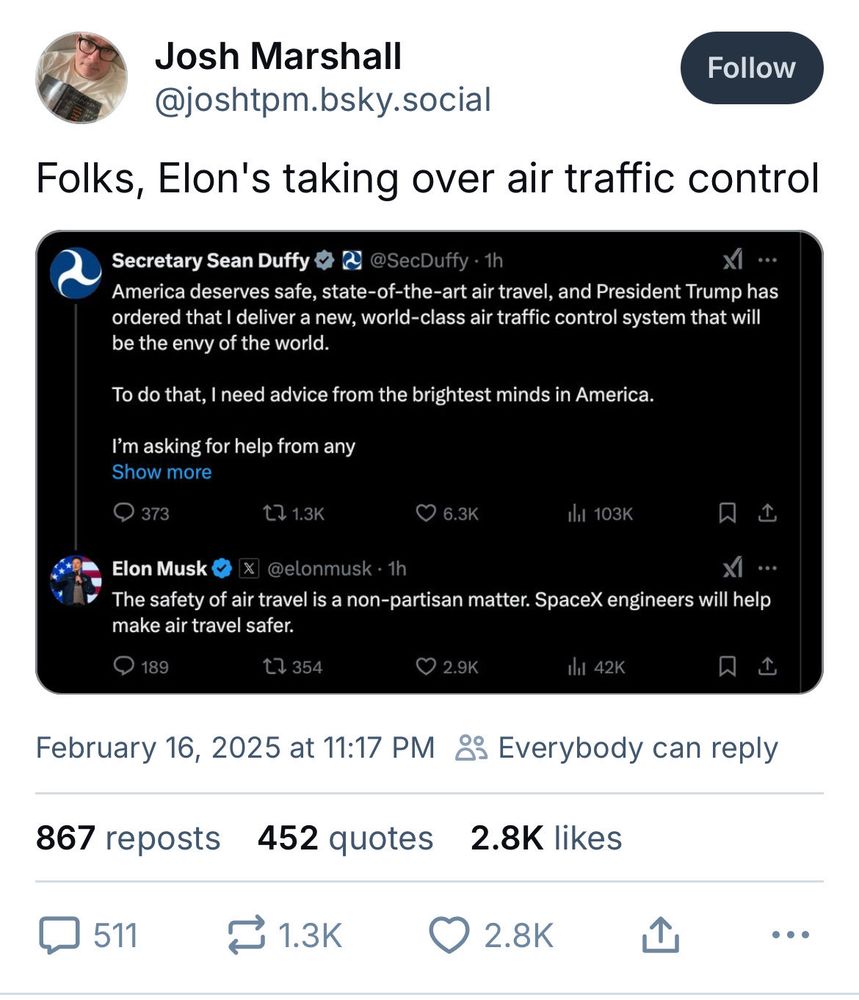
Musk is already taking advantage of the FAA’s unsettled conditions. On February 14, hundreds of FAA employees were fired. On February 16, he posted on social media that SpaceX would step in to address concerns about the recent spate of air accidents. By February 19, Wired reported that SpaceX engineers had been installed in jobs at the FAA.
This could become a repeating pattern in the coming months. The pain points from the DOGE cuts will become obvious very quickly. To course correct, the Trump administration will seek out private entities to fill in the gaps. Imagine massive contracts with big banks to take over IRS functions and payment systems for Treasury. The VA contracting with private companies that place per diem nurses instead of having a standing workforce. Hospitality and tourism companies running National Parks.
Medicare Advantage: A Cautionary Tale
Contracting out government programs would seem like a solution, but there would be drawbacks. Services provided by third-party contractors would likely cost more and be less effective than the current system. You only have to look at the Medicare Advantage program to see what happens when for-profit companies take over public services.
Medicare Advantage (MA) is an alternative to traditional Medicare. The way it works is CMS pays a per-enrollee fee to private insurers who administer coverage for Medicare-eligible seniors who choose these plans. Medicare Advantage plans offer everything Medicare covers in an all-in-one package, without the need for supplemental plans for things like prescription coverage. Many MA plans tack on added benefits, like vision coverage, gym memberships, and an allowance for over-the-counter medications. There is usually a small annual cost to seniors, and CMS pays the rest directly to the insurers.
The downside for seniors who choose these plans is that MA plans deny claims at an astounding rate. The companies that issue MA have added administrative rules like demanding prior authorization for certain services. That means seniors (or their doctors) need to file paperwork to get care approved. If they mess up paperwork, the claim gets denied. While these denials can be reversed, filing an appeal with the insurer is required. Only about 11% of denials are appealed. Seniors have to pay for care out of pocket or skip needed treatment.
It’s important to note that the denied services are covered, and companies SHOULD pay for them. The only barrier is the administrative rules that the companies themselves have established. It appears to be a deliberate tactic to avoid paying claims. It’s so egregious that there were Senate investigations into the practice in 2023. UnitedHealth Care is facing a class action lawsuit after it was revealed that the company used a deeply flawed AI claims processing system that denied valid MA claims.
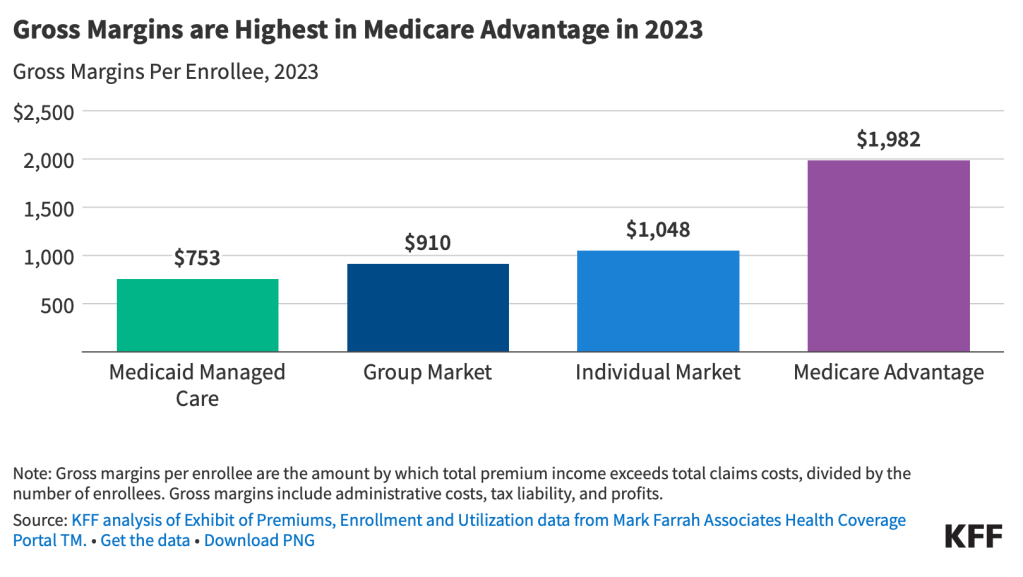
Medicare Advantage plans have become a profit leader for insurers. In 2021, research showed that CMS had overpaid Medicare Advantage plans a whopping $106 billion from 2010 through 2019. In 2023, Medicare Advantage plans, on average, turned a profit of nearly $2000 per enrollee. This is the highest profit margin of any health insurance product on the market.
Those profits are tax dollars. Instead of paying for health care for seniors, that money enriches health insurance company shareholders.
The Clock is Ticking
In the coming months, there is every possibility that we will see private takeovers of public services springing up like toadstools. Elon Musk’s cohort of Silicon Valley greed-lords is already salivating over the idea of lining up more taxpayer-funded contracts. Other major corporations appear to be setting themselves up to feed at the federal trough. It’s probably safe to suspect any company scrubbing DEI language from their website has one eye on future government contracts.
Instead of your tax dollars paying for services delivered directly by federal agencies, they’ll be paying for scaled-down versions of the same programs through the biggest businesses in the world. Will those businesses pay their employees well? Give them benefits comparable to civil service jobs. Of course not. But they’ll be hailed as “job creators,” providing “valuable services” to the American people.
It goes without saying that those “valuable services” won’t be as comprehensive and equitable as true public services. Instead of every tax dollar being allocated to program deliverables, a portion of tax-funded program budgets will be claimed as profit by people like Elon Musk.
We have a tiny window of opportunity to stand up for the system we have. A system being torn down by a quasi-governmental employee. A man who stands to gain billions in contracts to replace the programs and people he shitcanned. We have to push Congress and governors to reject the DOGE cuts. Tell them to demand protections for the federal workforce. Tell them to preserve the fully public programs that benefit their states.
The alternative is a country where public services have more corporate logos than NASCAR. The US of X.
You know those stories about mill towns where a new owner closes the factory and everyone loses their jobs?
That’s what it’s like in DC right now but the factory is the federal government and the new owner is Elon Musk.
A lot of local folks call DC a company town, and the government is the company. It seems like everyone is connected to politics or policy. At any gathering in my neighborhood you’ll find yourself talking to a lawyer from DoJ, a public health program director, a grant administrator at NIH, a scientist at EPA, a regulator at the SEC. One of my daughter’s friends likes to joke, “The feds are after me!” when his federal employee dad shows up to drive him home.
Most of these federal workers are career employees, non-partisan subject matter experts who have worked through multiple presidential administrations. They are public servants in the truest sense of the word. If you ask them about their jobs, they can all draw a clear line between what they do every day and how it benefits the American people. Their values don’t change from election to election and neither does their commitment to their work.
Now their work is under attack.
These past two weeks have felt like a multi-car pile up in my community, with more vehicles slamming into the chaos with each passing hour. Every day, there’s a headline about Musk prancing into an agency and announcing sweeping cuts to staff. Every day, I text friends and neighbors to see if they’re ok. Every conversation is about who has lost a job, or is about to lose a job, who can’t do their job because of cuts to funding or programs or entire agency missions.
Soon, those conversations will be about who is losing their house, who can’t afford their kids’ college, who is leaving the community they love because there are no job opportunities here.
The starkest conversations are the ones where federal workers describe what all the changes to government programs mean for the people they serve. How will food aid get to the families who need it? How will rural residents get medical care with community health centers shuttered? How will we will maintain positive foreign relations when we can’t offer basic assistance to other nations? Who will stop banks from charging excessive consumer fees? Will college students get their financial aid payments? What will Musk do with information he harvested about Medicare recipients? Who will protect the most vulnerable people in America from the richest man in the world?
There is no precedent for slashing government as dramatically and as indiscriminately as Trump and Musk are doing. It’s difficult to fathom how far-reaching the effects will be.
But we want to tell this story. We want to give voice to what’s happening in government and how it’s affecting both public servants and the public they serve.
If you are a federal employee, a grant recipient, or beneficiary of a federal program, we invite you to share your story with us – if it is safe for you to do so. We can spotlight these stories on our blog and help you pass them along to federal, state, and local officials. Simply reach out via out the contact form at the bottom of our home page. We will get back to you to discuss what next steps you are comfortable taking.







 Civic Action Hub of Maryland